🌱 Tree Root Investigation & Mapping
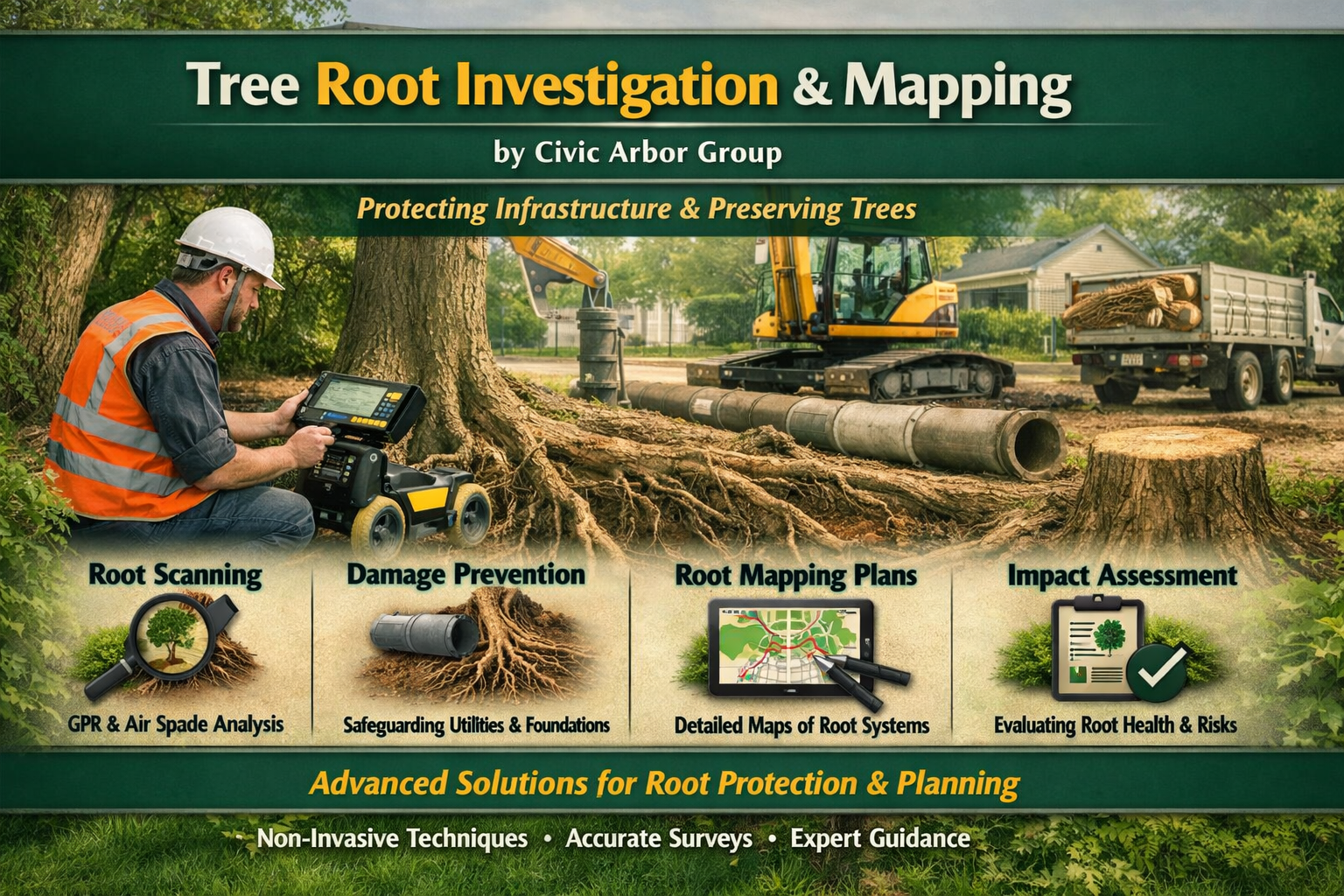
At Civic Arbor Group, our Tree Root Investigation & Mapping service provides advanced analysis of underground root systems to safeguard both infrastructure and tree health. Using specialized diagnostic tools and non‑invasive techniques, we identify root patterns, conflicts, and potential risks before construction or landscaping begins.
We understand that roots are the hidden foundation of every tree and often the unseen challenge in development projects. Our mapping reports offer clear, evidence‑based insights that help architects, engineers, and planners design around critical root zones, ensuring compliance with environmental standards while protecting valuable vegetation.
Why It Matters
Unmanaged root systems can damage pavements, utilities, and foundations, leading to costly repairs and safety hazards. Professional investigation ensures that development projects proceed without compromising tree stability or infrastructure integrity.
Why Choose Civic Arbor Group
Our arborists combine technical precision with ecological responsibility, using cutting‑edge tools to deliver accurate root data. With experience across residential, commercial, and government projects, we provide reports that are reliable, defensible, and tailored to site conditions.
Best quality support
Money back guarantee
Affordable service provider
What Our Service Include
Non‑Invasive Root Analysis
Advanced diagnostic methods to assess root spread and depth without harming trees.
Detailed Mapping
GIS‑based diagrams and visual evidence to support planning and design decisions.
Conflict Detection
Identification of roots impacting utilities, pavements, or building foundations.
Preservation Strategies
Recommendations for protecting critical root zones during construction.
Benefits for Developers & Planners
Root investigation and mapping streamline the design process by identifying potential conflicts early. This reduces risks, prevents costly redesigns, and ensures compliance with council and environmental requirements.
Reduced risk of infrastructure damage
Early identification of root conflicts
Environmentally responsible development practices
Clear, actionable guidance for architects and engineers
Quick Estimate